
On Cross-Border Passenger Transportation in the Greater Tumen Region
Sergei M. Smirnov
The cross-border transportation industry is one of the key sectors in the Greater Tumen region (GTR), its functioning ensures not only the economic development, but also affects politics, humanitarian ties and cross-cultural interaction.

GTR is a unique phenomenon meaning the territory in which the Greater Tumen Initiative (GTI) project is being implemented. The “heart” of the project is a small triangular-shaped area at the junction of the borders of three countries – China, Russia and the DPRK. In the early 1990s, this area became the first attempt to find ways and means for complex multilateral cooperation, mainly by trial and error. At present, the project has expanded many times in area and scale of tasks. It nominally includes four provinces of Northeastern China, Primorsky Territory of the Russian Federation, territories and ports of South Korea adjacent to the Sea of Japan / Eastern Sea, and the eastern regions of Mongolia. In total, more than 140 million people live here, the vast majority of them in China.
The territories included in the GTR, according to the main indicators of economic and social development, remain depressed compared to other, more developed provinces and regions of the participating countries.
This circumstance serves as a significant factor for activating projects for the development of territories, including those aimed at coordinating and integrating national transport and logistics systems.
The region has huge reserves of natural resources and, perhaps, even greater transit potential. The GTR gravitational zone includes all territories in the Far Eastern Federal District of Russia, all of Mongolia, the entire Korean Peninsula, northern China, the prefectures of Japan located on the coast of the Sea of Japan, and to a certain extent, the territories of the Central Asian states, through which transit cargo flows between East Asia and Europe pass.
The UN-supported GTI program, despite all its limitations, is currently perhaps the only relatively effective mechanism for multilateral regional cooperation in Northeast Asia. The program secretariat is located in Beijing. Working meetings of program participants at the level of deputy ministers and heads of local authorities are held at least twice a year. Republic of Korea is an active program participant despite the fact that it has no land access to GTR. The DPRK previously took part in the program activities, but has distanced itself in recent years. Japan has an observer status, considering its prospects for the development of domestic prefectures on the coast of the Sea of Japan.
To improve the program effectiveness, the GTI Research Institutions Network (RIN) was established several years ago. In May 2024, the RIN conference was held at the Liaoning University of International Business and Economics (LUIBE; Dalian, China), where the main focus was on the prospects for developing a passenger transportation system by sea, including through the creation of a regional sea cruise line.
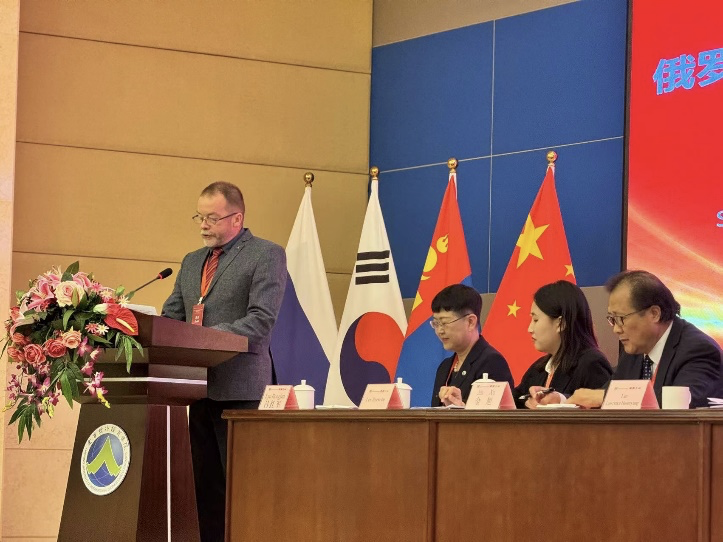
The opening of the RIN conference at LUIBE
An analysis of the prospects of the above project as well as the experience of recent research activities within the RIN / GTI Secretariat accomplished with active participation of the Admiral Nevelskoy Maritime State University experts, allows us to draw some conclusions and suggestions on the topic of this article.
One of the most serious problems for the successful development of the region is the insufficient and uneven development of transport and logistics infrastructure, especially at the intersections of state borders. This applies to all participating countries.
The insufficient and uneven development of transport and logistics infrastructure represents one of the most serious problems for the successful development of the GTR, especially at the border crossing points. This applies to all participating countries.
Without going into the specifics of the issue, it will hardly be possible to expand the bottlenecks on the main cross-border and intraregional cargo transportation routes in the coming years, no matter how hard we try. This will require colossal investments and a very large amount of time-consuming work.
However, the situation looks more optimistic for passenger transportation and the development of intraregional tourism.
Currently, the regional passenger transportation system, without which it is impossible to develop tourist, humanitarian and cultural exchanges, is at the initial stage of formation. The COVID-19 pandemic and the restrictions it caused, as well as subsequent events in Europe and the Middle East, have caused serious damage to this dynamically growing sector, in particular in the south of Primorsky Territory. Tourist exchanges between the border regions of Russia and China are currently recovering at a good pace, but they are experiencing certain difficulties and have objective limitations. There are many unresolved issues in the areas of visa policies, currency exchanges, the limited number of tourist products available on the market, and the fact that Russian side still maintains an insufficient level of passenger services. Thus, we will consider only one component in this article – ensuring transport connectivity in the passenger direction.
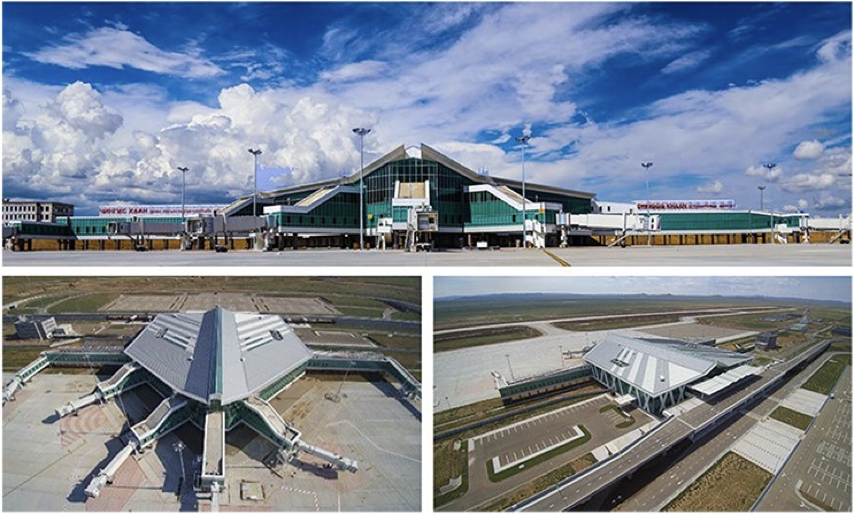
The situation with air transport is relatively good, at least in terms of infrastructure. There are quite a lot of modern international airports in the GTR, and the network of air routes connecting large cities is expanding. One can note the recent commissioning of the new Chinggis Khan International Airport facility in the capital of Mongolia, built with the active assistance of Japan. During the quarantine restrictions, the Ulaanbaatar International Airport turned into an important transit hub, solving the problems of passengers far beyond the GTR.
At the same time, though the regional air transport technically has a capacity to meet the existing and projected needs for passenger and tourist transportation, the negative impact of sanctions, especially in the financial sector, and the lack of desire to form a unified regional customs and visa policy applicable to transit passenger transportation hamper its potential.
The situation with rail transport is much more complicated. China is the undisputed leader in this field, which has created a high-speed passenger network connecting not only the administrative centers of the provinces, but also large cities. The Republic of Korea built a high-speed railway connecting the coast of the Sea of Japan with the center of the country just before the 2018 PyeongChang Winter Olympics. Other countries have nothing to boast about here. In Russia and Mongolia, intraregional transportation is carried out by ordinary trains, which are morally outdated and do not provide the required level of speed and comfort.
Therefore, according to our assessment,
the time has come to create a ring route of a high-speed railway connecting Hunchun, Vladivostok, Khabarovsk with an exit to Haerbin via the Bolshoy Ussuriysky Island.
Such a solution can be commercially viable and will create conditions for a multiple increase in tourist exchanges, not limited to only the Russian and Chinese sides.
The existing system of bus passenger transportation connecting Primorsky Territory with the PRC provinces of Heilongjiang and Jilin does not meet the XXI Century criteria and passengers’ demands. Completion of the reconstruction of the Kraskino and Pogranichny border crossings infrastructure, which we have been waiting for 13 years, will improve the situation to some degree, but will not solve all the problems. The travel time is too long, road quality is definitely not the best as well as the absence of adequate tourist services and a normal bus schedule.
A project to build a
high-speed highway connecting Hunchun with the port of Zarubino
can be one of possible solutions. Modern technologies (electric propulsion, a road on high overhead supports, noise screens) can ensure environmental safety for the inhabitants of the “Land of the Leopard” Nature Reserve. Since such a highway is in great demand among freight carriers, the costs of its construction may quickly pay off.
The construction of a road bridge across the Tumannaya (Tumen) River
with the reconstruction of road approaches from Kraskino (Russia) and Rajin (DPRK) providing access to the road network in the Yanbian Korean Autonomous Region of China is another interesting project in this area.
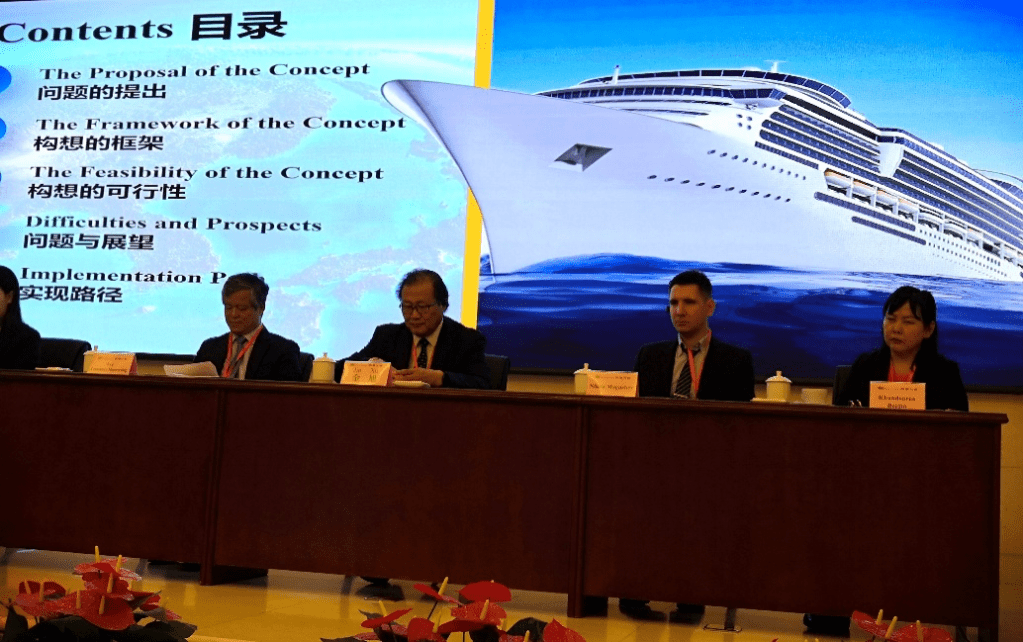
Sea transport is currently completely underused for passenger transportation. One can name only the ferry line Vladivostok – the ports of the Gangwon province of the Republic of Korea, which operates irregularly and has a very small capacity. Therefore, RIN GTI researchers are currently working on a concept for creating a permanent cruise line, which at the first stage will connect Dalian with one of the South Korean ports on the coast of the Sea of Japan / East Sea, and subsequently will extend to Vladivostok and Japanese ports. The advantage of a regular cruise line is its flexibility, a high level of comfort, the possibility of creating a network of feeder routes along the most attractive areas of the seas and coast of the Far East and the Arctic, as well as connections with land routes across the whole GTR including Mongolia on its basis. Such a project can be launched in the very near future, if the partner states agree on the introduction of simplified electronic entry and transit procedures for passengers of cruise ships.
Several local projects are also being developed for Primorsky Territory, such as coastal transportation of passengers and tourists from the ports of southern Primorye to Vladivostok and the Muravyinaya Bay gambling zone, the creation of a multimodal transit passenger hub near Vladivostok, etc.
 marinejournal.info