July 23 2026
The project is planned to be implemented jointly with POSCO Flow and the cities of Jeonnam-Gwangju and Gwangyang.
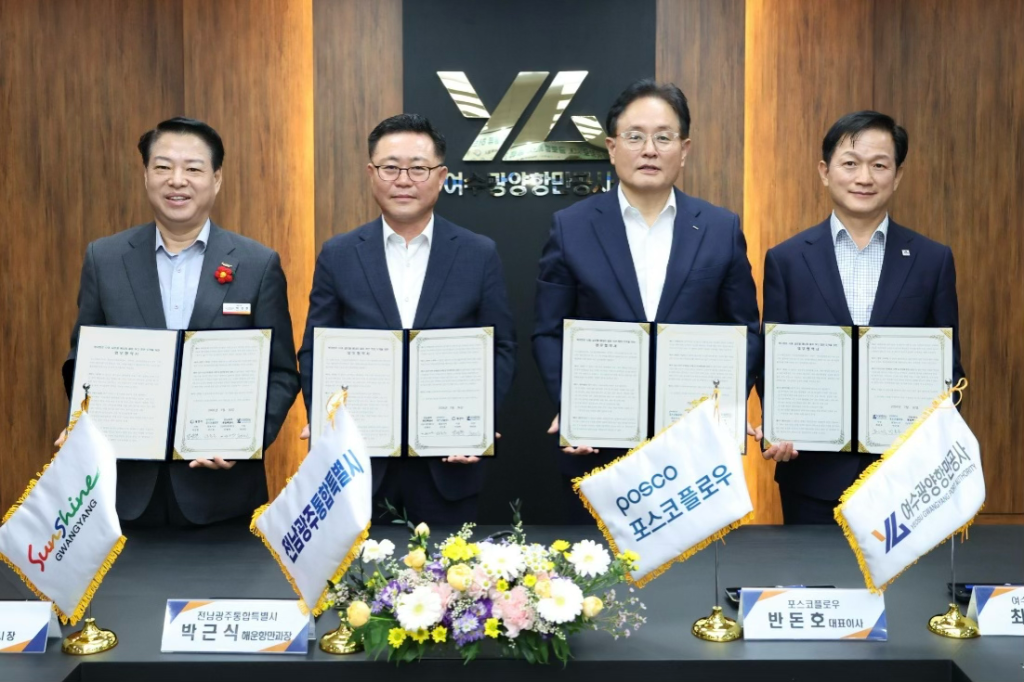
The Yeosu-Gwangyang Port Authority, major enterprises, and local governments have joined forces to develop Yeosu-Gwangyang Port into a global energy logistics hub. The parties signed a memorandum of understanding (MOU) on cooperation between the private sector, government agencies, and the port authority, along with POSCO Flow, the Jeonnam-Gwangju Special City, and the city of Gwangyang.
This agreement was concluded to actively implement the national policy of “Building a Korean Maritime Power Leading the Northern Sea Route Era” and to ensure future competitiveness in maritime logistics in the steel, raw materials, and energy sectors through proactive supply chain diversification.
The four participating organizations agreed to cooperate in the following areas: establishing a collaborative system to respond to the Northern Sea Route era and laying the foundation for its commercialization; Identifying joint projects along the Northern Sea Route and providing institutional and administrative support; activating LNG bunkering services; creating a supply chain for future energy logistics; strengthening the port’s rear logistics functions; expanding the volume of import and export cargo in the region and attracting shipping and cargo companies.
The participating organizations pledged to go beyond one-off trial runs and jointly implement a concrete plan to enhance the future competitiveness of Yeosu-Gwangyang Port. Following the signing of the agreement, they will form a working group in July 2026 to achieve effective results and begin follow-up measures in August.
President Choi Kwang-ho stated: “The Northern Sea Route is not just a new route, but a new growth axis that will shape the future supply chains and national competitiveness in maritime logistics in the Republic of Korea. Yeosu-Gwangyang Port has the competitiveness to become a global energy logistics hub, leading the way in the era of the Northern Sea Route, drawing on the country’s largest raw materials and energy logistics base, as well as its clean fuel supply capabilities. We are confident that this agreement will pave the way for the formation of the Northern Sea Route Economic Zone.”
Furthermore, the administration plans to continue supporting trial voyages along the Northern Sea Route, intensify LNG bunkering, and develop a supply system for clean fuels of the future, with the goal of becoming the Republic of Korea’s leading global energy logistics hub, simultaneously ensuring the stability of national supply chains and contributing to the revitalization of the regional economy.
Source: https://portnews.ru/news/394614/

